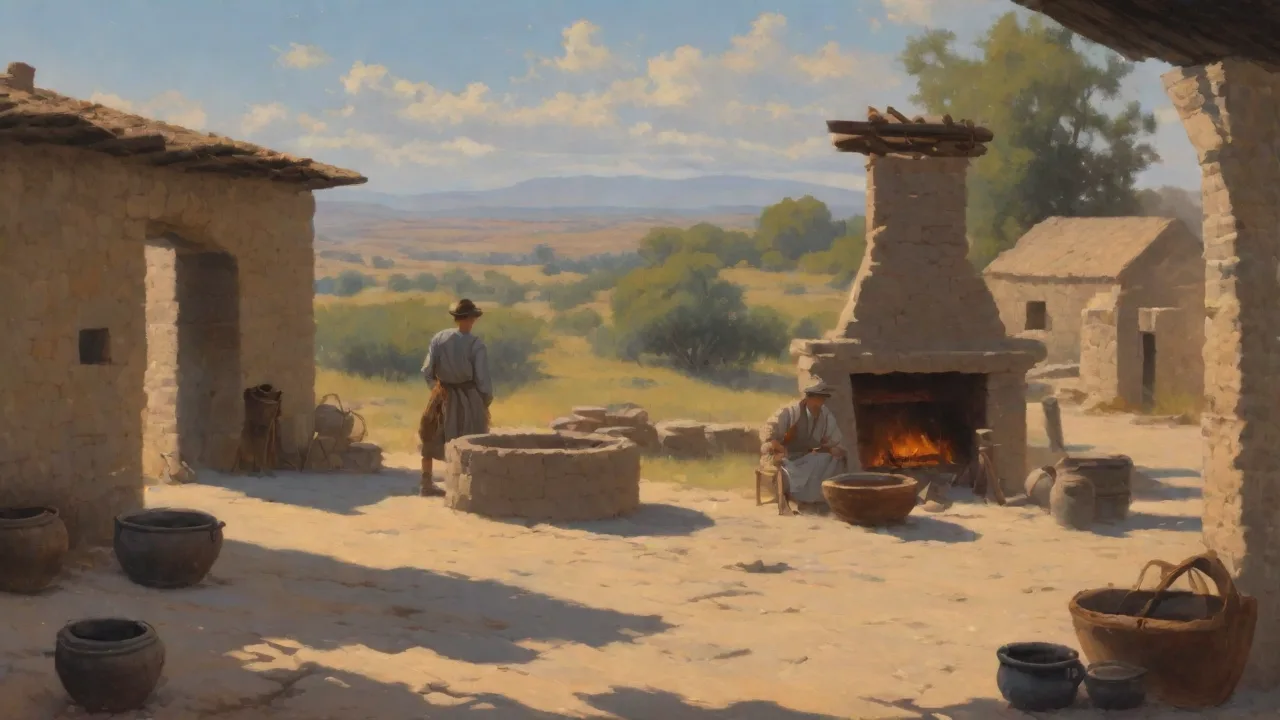
The Role of Prehistoric Fireplaces and Hearths in Daily Life and Community Bonding
The Central Hearth: Engineering and Daily Utility
The placement and construction of a prehistoric hearth reveal a deep understanding of thermodynamics, safety, and domestic organization. Early hearths were often simple scooped depressions lined with stones or clay, but over time they became more sophisticated. By the Middle Paleolithic, Neanderthals and early Homo sapiens were building stone-lined pits that could contain embers and radiate heat efficiently. These features were frequently positioned at the center of a dwelling, allowing the heat to circulate evenly and creating a natural focal point for the space.
The daily utility of the hearth encompassed a range of survival needs beyond simple warmth. Thermal regulation was critical during glacial periods; the hearth allowed humans to inhabit colder latitudes and endure harsh seasons. It also served as a safety barrier—the light and smoke deterred predators and insects, creating a protected zone for sleeping and working. Furthermore, the hearth provided reliable lighting after dusk, extending the productive day and enabling tasks such as tool maintenance, hide working, and craft production to continue into the evening.
The maintenance of a fire required skill and division of labor. Tending the hearth—adding fuel, banking embers, managing smoke—was likely a shared responsibility, often involving children and adults alike. This daily chore fostered routine and cooperation, as well as a practical knowledge of local wood resources and combustion rates. Archaeological sites such as Gesher Benot Ya'aqov in Israel, dating to around 790,000 years ago, show clear evidence of repeated hearth use, suggesting that early hominins had already mastered fire control and understood the value of a maintained fire site.
Beyond these practical dimensions, the hearth also served as a spatial organizer within the dwelling. The area immediately around the fire was typically kept clear of debris and flammable materials, creating a natural division between cooking zones, sleeping areas, and workspaces. This functional zoning reflects an early form of interior design and household management that would become increasingly sophisticated over time.
Culinary Transformation: Cooking and Food Processing
Perhaps the most profound impact of the hearth was on diet and nutrition. Cooking over an open fire transformed raw ingredients into safer, more digestible, and more flavorful meals. The hearth allowed early humans to roast meat, bake starchy tubers, parry seeds, and boil water using heated stones or clay vessels. These methods broke down tough fibers, neutralized toxins, and increased the caloric availability of food, which in turn supported brain growth and reduced the energy required for digestion.
The development of earth ovens—pits lined with hot stones and covered with vegetation and earth—represented a leap in cooking efficiency. By the Neolithic period, hearths were often accompanied by specialized features such as grinding stones, roasting pits, and pottery kilns. The ability to process and store food more effectively contributed to the shift toward sedentism and the rise of agricultural communities. For example, at the Neolithic site of Çatalhöyük in modern-day Turkey, excavators have found hearths integrated into house floors alongside storage bins, suggesting that the hearth was the epicenter of daily food preparation and preservation.
Shared cooking also fostered community bonding. The hearth became a stage for food-sharing, a practice that reinforced social ties and reciprocity. The act of preparing and consuming meals together likely involved rituals, storytelling, and the transmission of culinary knowledge between generations. In many hunter-gatherer societies observed ethnographically, the hearth is the locus of food distribution, where individuals contribute to the communal pot and share in the bounty.
Experimental archaeology has provided further insights into prehistoric cooking techniques. Reconstructions of earth ovens and open-hearth cooking demonstrate that the process required careful temperature management, often involving the use of specific wood species to achieve desired heat levels. Researchers at sites such as Monte Verde in Chile have identified residues of cooked plant foods on hearth stones dating to around 14,500 years ago, confirming the antiquity and sophistication of plant processing techniques.
The Nutritional Revolution
The shift to cooked food had measurable biological consequences. Cooking increased the energy yield from food by 30 to 50 percent for some starches and proteins, allowing early humans to obtain sufficient calories with less chewing time. This freed up energy for brain development and reduced the size of the digestive tract over evolutionary time. The hearth was therefore not just a convenience but a driver of human biological evolution.
Social Hubs: Storytelling, Ritual, and Bonding
Beyond practical functions, the hearth served as a powerful social magnet. The flickering light and warmth created an intimate atmosphere conducive to conversation, myth-making, and collective singing. Archaeological evidence from sites like Abri Pataud in France shows that hearths were often surrounded by postholes, suggesting shelters or windbreaks that enclosed the space, further emphasizing their role as gathering places.
Ritual and ceremonial activities frequently centered on the hearth. In many prehistoric cultures, the hearth was considered a sacred space, a conduit between the living and the ancestors, or the spirit world. Offerings, burials, and feasts have been identified near hearths in sites from the European Upper Paleolithic to the Jomon period in Japan. The controlled fire itself may have symbolized life, transformation, and continuity. The smoke rising from the hearth was seen as carrying prayers or messages to the sky.
Community bonding also occurred during long winter nights when groups huddled around the hearth. These sessions were opportunities for storytelling, teaching, and social cohesion. Myths, laws, and genealogies were passed down orally, with the fire serving as a theatrical backdrop. The rhythmic crackling of the fire and the shared warmth would have lowered social barriers, encouraging cooperation and trust. The hearth thus functioned as a gluing force, binding individuals into a cohesive social unit.
The Hearth as Performance Space
The spatial arrangement of hearths within settlements often reflects their social significance. At the Dolní Věstonice site in the Czech Republic, dating to around 27,000 years ago, a large central hearth was surrounded by smaller domestic hearths, suggesting a hierarchy of gathering spaces. The central hearth likely served as a venue for communal ceremonies, while individual family hearths catered to daily needs. This duality—private and public—highlights the hearth's role in both intimate family life and broader community integration.
Technological Evolution: From Simple Fire Pits to Sophisticated Hearths
The technological trajectory of the hearth mirrors the wider arc of human innovation. The earliest hearths were likely uncontained fire patches, but by the Lower Paleolithic, we see the first intentional fire pits—shallow depressions lined with stones to contain embers and improve air flow. The invention of stone linings provided thermal mass, storing heat that would radiate long after the flames died.
During the Upper Paleolithic, hearths became more elaborate. Some were constructed with clay or daub walls to shield the fire from wind and reflect heat. Others were built on raised platforms, perhaps to keep the fire dry or to elevate it for cooking. The use of hearth stones (hot rocks for boiling) and fire-cracked rock features indicates that heat from the hearth was being transferred to other media for cooking and tool making.
In the Neolithic, hearths evolved in tandem with architecture. The introduction of closed hearths with chimney-like vents improved smoke management, reducing indoor air pollution—a significant health challenge. The hearth became an integrated part of the home, often occupying a permanent position against a wall or in a designated room. This shift reflects the growing complexity of household organization and the specialization of space.
The transition from open to enclosed hearths also had social implications. As hearths became more enclosed, they may have become more private, limiting the visibility of fire from outside the home. However, indoor hearths still served as communal gathering points within the household. They remained the heart of domestic life until the advent of central heating, which only recently displaced them from the center of the home.
Innovations in Fuel Management
The choice of fuel was not random. Different wood species burn at different temperatures and produce varying amounts of smoke and ash. Prehistoric people selected fuels based on availability and intended use. For example, oak and ash produce long-lasting coals ideal for overnight fires, while pine and fir provide quick, high-temperature flames suitable for cooking. In treeless regions, alternative fuels such as dung, peat, and bone were used. The management of fuel resources required extensive environmental knowledge and often involved seasonal collection and storage strategies.
Archaeological Evidence: What Hearths Tell Us
Archaeologists study hearths with meticulous attention, as they preserve a wealth of information. Sediment analysis can reveal temperatures reached, length of use, and types of fuel burned. Phytolith and charcoal studies identify the plant species used as fuel, which in turn informs us about the local environment and resource management. Radiocarbon dating of charcoal from hearths provides chronometric dates for occupation layers, forming the backbone of regional chronologies.
At sites like Klasies River Mouth in South Africa, hearths dating to around 125,000 years ago contain evidence of shellfish cooking, indicating that coastlines and fire use were intertwined with early modern human subsistence. Similarly, hearths from the Pavlov Hills in the Czech Republic (around 30,000 years ago) are associated with mammoth bone, ivory, and art objects, suggesting that the hearth was not only a domestic feature but also a locus for symbolic and artistic expression.
Hearths also provide insight into social organization. The size and number of hearths within a site can indicate population density, the duration of occupation, and even social hierarchy. In some sites, large communal hearths are found centrally, while smaller family-sized hearths ring the periphery. This spatial arrangement suggests that while the community gathered together for certain activities, individual households maintained their own hearths for daily cooking and warmth.
Microstratigraphic Analysis
Recent advances in microstratigraphy have allowed archaeologists to examine hearth deposits at the microscopic level. By analyzing thin sections of hearth sediments, researchers can identify distinct layers of ash, charcoal, and burnt soil, each representing a separate firing event. This technique has revealed that some hearths were used for decades or even centuries, with periodic cleaning and relining. Such data provide insights into the longevity of settlements and the stability of social structures.
The Enduring Legacy of the Hearth
The prehistoric hearth is the ancestor of every modern stove, fireplace, and campfire. Its invention was a turning point in human evolution, enabling dietary improvements, social cohesion, and technological innovation. Even today, the image of the hearth—the family gathered around a fire—resonates as a symbol of home, warmth, and community. Understanding the role of prehistoric fireplaces and hearths deepens our appreciation for the simple yet profound technologies that shaped our ancestors' lives and continue to influence our own.
The psychological and emotional significance of the hearth persists in modern culture. The word "hearth" itself carries connotations of domesticity, security, and hospitality. In many languages, the term for "home" is etymologically linked to the hearth. This linguistic heritage underscores the enduring power of fire as a symbol of human connection and survival.
As we face contemporary challenges such as energy scarcity and climate change, the lessons of the prehistoric hearth remain relevant. The efficient management of fire, the use of sustainable fuel sources, and the social bonding that occurs around shared heat sources offer models for resilient community living. The hearth was not just a technology but a social institution that shaped human behavior for hundreds of thousands of years.
For further reading, consult sources such as Smithsonian's article on early fire use, Nature's study on hearth residues and Neanderthal cooking, and the comprehensive JSTOR overview of hearth technology by Sarah L. R. Mason. These resources provide deeper dives into the archaeological evidence and its implications for understanding prehistoric daily life and community bonding.
Frequently Asked Questions About Prehistoric Hearths
How did prehistoric people start fires?
The most common methods were striking flint against pyrite or iron ore to create sparks, or using a fire drill—a wooden stick rotated rapidly against a wooden base to generate friction heat. Both techniques required skill and practice, and the ability to create fire on demand was likely a specialized knowledge passed down within families or social groups.
Were hearths used only for cooking and warmth?
No. Hearths served multiple functions including lighting, protection from predators, tool hardening (heat-treating stone tools to improve flaking properties), clay firing for pottery, and even smoke processing of hides and meats. In some cultures, the hearth was also used for cremation burials and ritual offerings.
How do archaeologists distinguish a natural fire from a human-made hearth?
Several criteria are used: the presence of a prepared basin or stone lining, the concentration of charcoal and ash in a defined area, evidence of repeated use (layered deposits), association with stone tools or food remains, and temperatures that are consistent with controlled combustion rather than wildfire. Microscopic analysis of ash crystals can also reveal whether the fire was contained and tended.
What is the oldest known hearth?
The earliest widely accepted evidence of controlled fire use comes from Gesher Benot Ya'aqov in Israel, dating to around 790,000 years ago. However, some sites in Africa, such as Wonderwerk Cave in South Africa, show possible evidence of fire use as early as 1 million years ago, though the interpretation remains debated among archaeologists.
Did Neanderthals use hearths?
Yes. Neanderthals were skilled fire users. Hearth features have been found at numerous Neanderthal sites across Europe, including Abric Romaní in Spain and Krapina in Croatia. These hearths show evidence of careful construction, fuel selection, and repeated use over generations.
How did hearths change with the rise of agriculture?
With the Neolithic transition, hearths became more permanent and integrated into house structures. They were often built with clay or stone and sometimes included ovens for baking bread. The need for large-scale cooking for storage and processing of grains led to the development of communal hearths and kilns. The hearth also became a fixed architectural element rather than a portable or temporary feature.