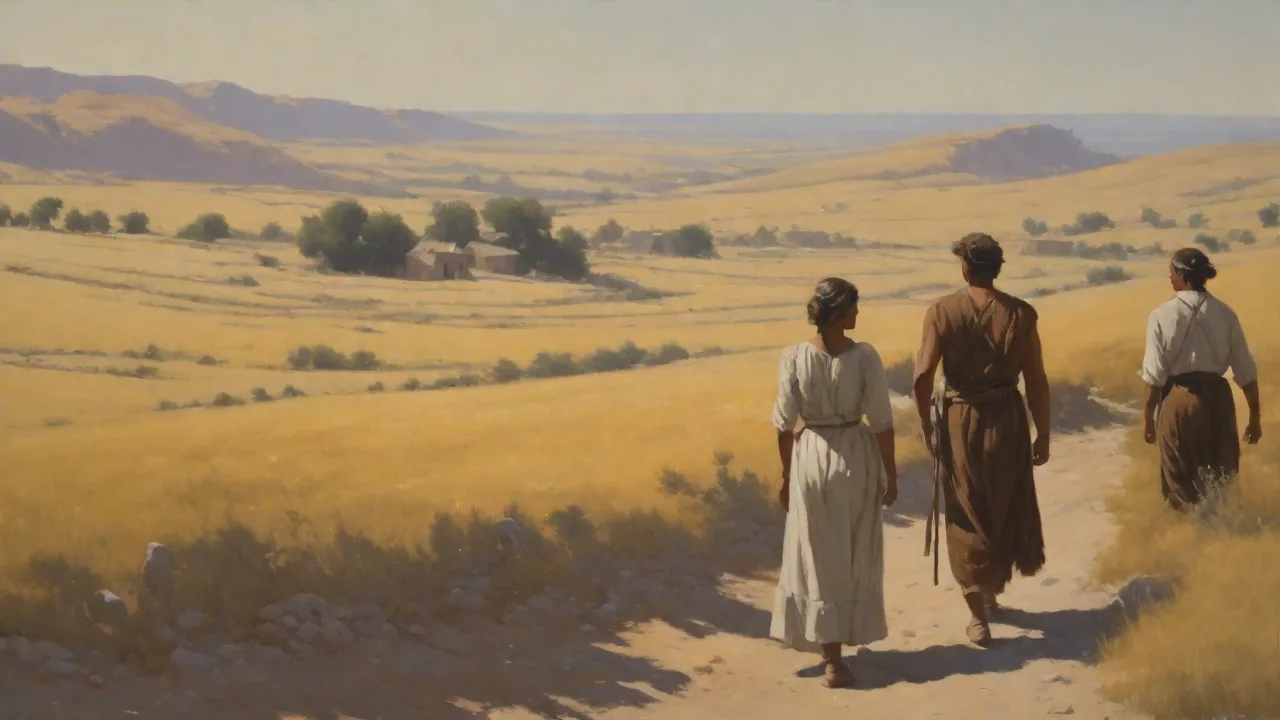
The Impact of Prehistoric Population Growth on Environment and Resources
Introduction: Understanding Prehistoric Population Growth
Prehistoric population growth describes the long arc of human demographic expansion from the emergence of early hominins several million years ago to the dawn of written history and ancient civilizations. This growth was neither steady nor uniform; it was punctuated by technological innovations, climatic shifts, and cultural changes that dramatically altered the relationship between human societies and the natural world. The scale of this transformation is staggering: from a few hundred thousand hunter-gatherers during the Paleolithic to perhaps 50–100 million people by the end of the Neolithic, human numbers grew by orders of magnitude. This expansion laid the foundation for modern environmental challenges, offering a crucial lens through which to understand sustainability, resource depletion, and ecosystem change.
Studying prehistoric population dynamics helps us recognize that environmental degradation is not a purely modern phenomenon. Ancient societies grappled with deforestation, soil exhaustion, and water mismanagement long before the Industrial Revolution. Their successes and failures provide valuable lessons for contemporary efforts to balance human needs with planetary boundaries.
Early Human Populations and Their Environment
Paleolithic Demographics and Mobility
During the Paleolithic era (roughly 2.5 million years ago to 10,000 BCE), human populations were extraordinarily sparse. Estimates suggest that by the end of the Paleolithic, the global human population was between 1 and 10 million individuals. These small, nomadic bands relied on hunting, gathering, and fishing. Their mobility meant they rarely exhausted local resources; seasonal movements allowed ecosystems to recover. The overall ecological footprint of Paleolithic humans was minimal, comparable to that of other large omnivores.
Fire, Megafauna, and Early Extinctions
One of the earliest environmental impacts was the use of fire for hunting, land management, and cooking. Deliberate burning altered vegetation patterns, creating mosaics of grassland and forest that favored certain species. More controversially, human hunting is implicated in the extinction of megafauna—large mammals such as woolly mammoths, giant ground sloths, and saber-toothed cats—across continents. In Australia, the arrival of humans roughly 65,000 years ago coincided with the loss of most giant marsupials. In the Americas, megafaunal extinctions followed human colonization around 15,000–13,000 years ago. While climate change also played a role, overhunting by skilled Paleolithic hunters likely accelerated or caused these extinctions. This early loss of keystone species altered entire ecosystems, reducing biodiversity and changing nutrient cycles.
Low-Impact, Sustainable Lifestyles
Despite these localized impacts, the overall Paleolithic footprint remained light. Populations were constrained by food availability, disease, and limited technology. Social structures such as sharing, seasonal movement, and taboos against overexploitation helped maintain resource abundance. The carrying capacity of the land for hunter-gatherers was low, but the system was inherently sustainable over millennia.
The Agricultural Revolution and Population Increase
The Neolithic Transition: A Demographic Tipping Point
Around 10,000 BCE, in the Fertile Crescent of the Middle East, humans began to domesticate plants (einkorn wheat, barley, lentils) and animals (goats, sheep, cattle). This agricultural revolution independently emerged in several other regions—China (rice, millet), Mesoamerica (maize, beans), South America (potatoes, quinoa), and Africa (sorghum, yams). The shift from foraging to farming had profound demographic consequences. Stable food supplies reduced starvation and allowed for higher population densities. Villages grew into towns; the world’s first major settlements, such as Çatalhöyük in Anatolia, housed thousands of people.
Estimates suggest that pre-agricultural population growth rates were about 0.1% per year. After the Neolithic adoption, growth rates rose to perhaps 0.5% per year or more in favorable regions. Within a few millennia, populations had increased tenfold or more. This demographic explosion was both a result and a cause of further technological and social changes.
Deforestation and Land Clearance
The most immediate environmental impact of Neolithic farming was the clearance of forests for fields. Slash-and-burn agriculture (swidden) allowed farmers to create fertile plots, but as populations grew, the fallow periods shortened, leading to nutrient depletion. In Europe, pollen records show dramatic declines in tree pollen alongside increases in cereal pollen around 7,000 years ago. Forests that had stood for millennia were replaced by open agricultural landscapes. Deforestation on this scale altered local climate, increased soil erosion, and reduced habitat for wildlife.
Soil Degradation and Salinization
Intensive cultivation without adequate replenishment led to soil exhaustion. Farmers in dry regions, especially in Mesopotamia and the Indus Valley, turned to irrigation. While irrigation boosted yields, it also brought salt to the surface through capillary action. Over centuries, saline buildup rendered once-fertile fields barren. The Sumerians, for example, experienced steady declines in wheat yields due to salinization; by 2000 BCE, barley (more salt-tolerant) largely replaced wheat. This forced abandonment of lands and contributed to the decline of southern Mesopotamian city-states.
Domestication of Animals and Greenhouse Gas Emissions
Herd animals—cattle, sheep, goats—were a vital source of meat, milk, hides, and manure. But large herds also emitted methane and required significant grazing land. Overgrazing led to desertification in semiarid regions such as the Mediterranean and North Africa. Some research suggests that pre-industrial methane levels rose substantially due to early agriculture and livestock, contributing to moderate climate change even before the Industrial Revolution.
Environmental Impact of Growing Civilizations
Urbanization and Resource Extraction
With the rise of cities and states around 5,000 years ago in Mesopotamia, Egypt, the Indus Valley, China, and Mesoamerica, population concentration intensified demands on the environment. Cities required enormous inputs of food, water, building materials, and fuel. Timber was harvested for construction, shipbuilding, and metallurgy. The forests of Lebanon, famous for cedar, were systematically logged by successive empires—Phoenicians, Assyrians, Babylonians, Persians, and Romans—leading to near-total deforestation of highland regions. Similarly, on Crete, deforestation contributed to soil erosion and the decline of the Minoan civilization.
Metals such as copper, tin (for bronze), and later iron required mining and smelting, which consumed large amounts of wood for charcoal. The resulting deforestation could extend for kilometers around mines. In ancient Rome, lead mining and smelting left measurable contamination in Greenland ice cores—an early example of industrial pollution.
Water Management and Its Consequences
Large-scale irrigation systems were engineered in river valleys worldwide. The construction of canals, dikes, and reservoirs transformed hydrology. While these systems supported population growth, they also created vulnerabilities. Poor drainage led to waterlogging and salinity; canal siltation required constant maintenance; and centralized control of water gave rulers enormous power. In the Maya lowlands, extensive water storage systems (reservoirs and aguadas) allowed cities like Tikal to thrive during dry seasons, but eventual water mismanagement and drought contributed to the Classic Maya collapse in the 9th century CE.
Biodiversity Loss and Species Extinctions
Prehistoric human expansion is linked to a wave of extinctions beyond the megafauna die-off. Island ecosystems were particularly vulnerable. When humans colonized New Zealand around 1280 CE, they rapidly drove to extinction the moa—giant flightless birds—along with several other species. Similarly, the arrival of people in Madagascar around 1,500 years ago led to the extinction of elephant birds, giant lemurs, and other endemic fauna. Habitat destruction and hunting combined to eliminate species that had evolved without natural predators. The fossil and archaeological records show a clear pattern: wherever humans spread, biodiversity declined.
Resources and Sustainability Challenges
Carrying Capacity and Malthusian Limits
The Malthusian theory posits that population growth inevitably outstrips food production, leading to famine, disease, and mortality. Prehistoric history provides numerous examples of such checks: the collapse of the Akkadian Empire (linked to drought and overexploitation), the decline of the Indus Valley civilization (possibly from shifting river courses and salinization), and the disintegration of the Classic Maya polities (population pressure combined with climate change). Yet societies also exhibited remarkable resilience and innovation—the Boserupian view—in which population pressure spurs technological and social improvements (e.g., terracing, crop rotation, irrigation). The tension between these models is at the heart of sustainability studies.
Case Study: Mesopotamia
In southern Mesopotamia (modern Iraq), intensive agriculture supported some of the world’s first cities, but it came at a cost. Continuous irrigation without adequate drainage led to progressive salinization. Wheat yields fell from around 2,500 kg per hectare in 2400 BCE to about 900 kg by 2000 BCE. Barley replaced wheat, but even it eventually declined. By 1700 BCE, many fields were abandoned, and the center of power shifted north to Babylonia. This example illustrates how environmental degradation caused by resource overuse can undermine entire civilizations.
Case Study: Easter Island (Rapa Nui)
Easter Island is a classic cautionary tale. Polynesian settlers arrived around 1200 CE. Over centuries, they built a complex society that famously erected massive stone statues (moai). To move and erect these statues, and to clear land for agriculture, the islanders deforested the island almost completely. By the time Europeans arrived in 1722, the forest was gone, leading to soil erosion, loss of timber for canoes, and collapse of the ecological base. Population decline followed. While the details of the collapse are debated, the fundamental lesson—unsustainable resource exploitation can cause societal decline—remains compelling.
Case Study: Ancient Greek and Roman Land Use
In the Mediterranean, classical civilizations extensively terraced hillsides and built sophisticated aqueducts. Yet overgrazing and deforestation caused widespread erosion. Plato lamented the deforested hills of Attica: “What remains is like the skeleton of a sick man.” Roman land management techniques (e.g., villa estates, crop rotation) were highly productive but often led to soil exhaustion in frontier provinces. The decline of the Western Roman Empire is linked to environmental degradation, though the full picture involves military, economic, and political factors.
Case Study: The Anasazi of the American Southwest
The Ancestral Puebloans (Anasazi) built elaborate cliff dwellings and irrigation systems in the arid Four Corners region of the modern United States. Between 900 and 1300 CE, their population grew substantially, supported by water harvesting and dryland farming of maize, beans, and squash. However, a prolonged drought beginning around 1130 CE, combined with soil depletion and deforestation for construction and fuel, placed the system under severe stress. By the late 13th century, the major population centers like Mesa Verde and Chaco Canyon were largely abandoned. Tree-ring data confirm the drought, but archaeological evidence also points to resource overuse and social conflict as contributing factors. The Anasazi example underscores how even sophisticated water management strategies can fail when population pressure and environmental variability converge.
Technological Innovation as a Double-Edged Sword
Metallurgy and Its Ecological Toll
The transition from stone to metal tools and weapons marked a significant technological leap, but it came with substantial environmental costs. Copper smelting began in the Balkans and Middle East around 5000 BCE, followed by bronze (copper-tin alloy) and eventually iron. Each stage required increasing amounts of ore and fuel. The forests surrounding ancient mining sites, such as the copper mines of Timna in the Negev or the ironworks of the La Tène culture in Europe, were often stripped bare. Charcoal production for smelting consumed up to 10 tons of wood for every ton of metal. This deforestation amplified erosion and altered local hydrology, creating long-lasting scars on the landscape.
Navigation and Resource Extraction Networks
The development of seafaring vessels expanded human access to distant resources. Early Polynesian navigators colonized remote Pacific islands, bringing with them rats, pigs, and agricultural practices that transformed island ecosystems. The lapita culture, which spread through Melanesia and Polynesia around 3000–2500 years ago, introduced pottery and horticulture that contributed to deforestation and species extinction across island chains. Similarly, the Phoenicians and Greeks established trade networks that extracted timber, metals, and agricultural goods from across the Mediterranean, spreading environmental impacts beyond their immediate territories. This early globalization of resource extraction foreshadowed the interconnected environmental challenges of the modern world.
Climate Variability and Population Response
Holocene Climate Optimum and Neolithic Expansion
The early Holocene (roughly 11,700 to 5,000 years ago) was a period of relatively warm and stable climate known as the Climatic Optimum. This favorable environment allowed Neolithic farming communities to expand into new regions, including Europe, where the Linearbandkeramik (LBK) culture spread rapidly across the continent. Warmer temperatures and reliable rainfall supported higher crop yields, enabling population growth. However, the expansion also pushed farmers into marginal lands—steep slopes, thin soils, and drought-prone areas—where sustainability was more fragile. When climate shifted again, these frontier settlements were often the first to be abandoned.
Abrupt Climate Events and Societal Collapse
Prehistoric populations faced not only gradual climate shifts but also abrupt events. The 4.2 kiloyear event (around 2200 BCE) was a severe drought that affected large parts of the Middle East, North Africa, and South Asia. It is linked to the collapse of the Akkadian Empire in Mesopotamia, the Old Kingdom in Egypt, and the Indus Valley civilization. These societies had grown to depend on stable agricultural surpluses; when the rains failed, their complex social and political structures unraveled rapidly. The lesson is clear: population growth that outpaces the resilience of the resource base creates acute vulnerability to environmental shocks.
Conclusion: Lessons from Prehistory
The prehistoric record demonstrates that human population growth has always carried environmental consequences. From the first fires set by Paleolithic hunters to the irrigation networks of Mesopotamia, each technological advance enabled larger populations but also increased pressures on ecosystems. Some societies found ways to sustain productivity for centuries; others collapsed when they exceeded their resource base.
Modern parallels are striking. Global population has surged from roughly 1 billion in 1800 to over 8 billion today, driving deforestation, biodiversity loss, climate change, and water scarcity. Many of the same dynamics—overshoot, feedback loops, and delayed collapse—are visible in contemporary systems. However, the pre-industrial past also offers examples of sustainable practices: terracing in the Andes, agroforestry in the Amazon, and crop rotation in medieval Europe that can inform modern regenerative agriculture.
Ultimately, the story of prehistoric population growth is not one of inevitable doom. It is a story of choice, adaptation, and often, the failure to adapt. By understanding how ancient peoples managed—or mismanaged—their environment, we can better navigate the challenges of the Anthropocene. The key takeaway is that sustainability is not a fixed state but an ongoing process of balancing human needs with the carrying capacity of ecosystems. Prehistory shows that balance is achievable, but only through wisdom, restraint, and a deep respect for the natural systems that support all life.
For further reading on prehistoric population dynamics and their environmental impacts, consider resources from Britannica’s overview of prehistoric demography, the study on prehistoric population cycles in Nature Scientific Reports, and the Our World in Data article on population growth over the long run. These sources provide data and context for the trends discussed here.